Veronique Magnin


In Greece, herders walk their animals from the winter plains to the summer mountain pastures since the Middle Ages. But not only humans are nomads… The country's last Egyptian vultures also fight for survival, travelling more than 5000 km from Africa every year to their breeding grounds near the pastoralist communities in Greece, where there are now fewer than 3000 transhumant herds and only five Egyptian vulture breeding pairs.
Bonded by the same fate, the fragile future of these two types of “nomads” demands immediate action before it’s too late… Director: Giannis Floulis; Producer: © Hellenic Ornithological Society, 2022. 13 min.
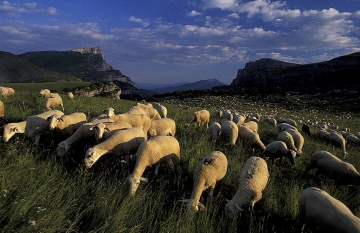
It concludes in the spring of 2018 when the flock returns to Santiago-Pontones, their place of origin in the Sierra de Segura. Joaquín Lisón and Conchi Meseguer (director and executive producer) were motivated to make a film about transhumance to highlight a natural, social and cultural heritage of the Iberian Peninsula: the extensive grazing of the Segura sheep, a very hardy native breed, uses organic methods and produces high-quality organic meat. The flock moves on foot and uses natural resources year-round, helping maintain the landscape and livestock trails, fertilise the soil, prevent wild fires and maintain biodiversity as ecosystem services. Despite these advantages and the production of high-quality lamb, this system is at risk of disappearing. Sheep farming has fed and clothed us for centuries; it helped keep people in rural areas, generated diverse native breeds and shaped our culture; it is therefore a heritage that must be defended.
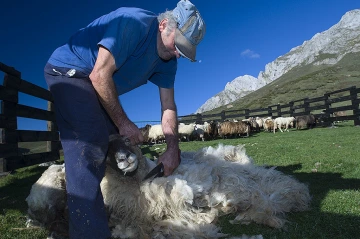
Shepherds School INLAND
Shepherds School INLAND
Shepherds School INLAND